

Quick Recap on Single Mum Burnout and Hormonal Imbalance
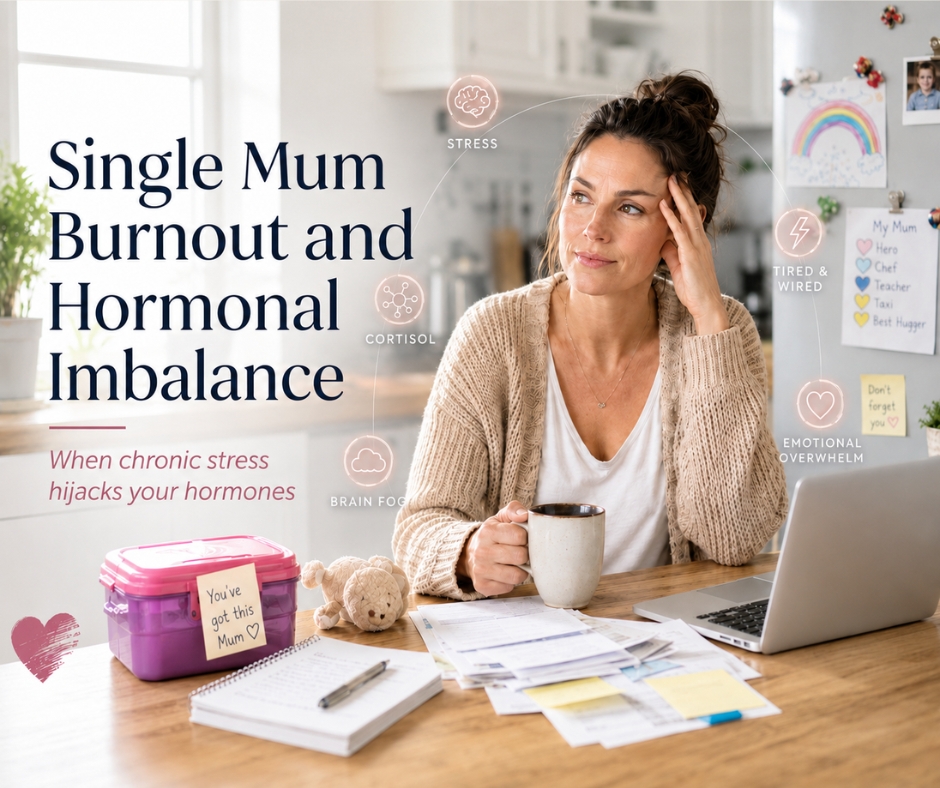
If you are a single mother, you are likely intimately familiar with a very specific, bone-deep type of exhaustion. It is the kind of fatigue that doesn’t disappear after a surprisingly good night’s sleep. It is the heavy, foggy reality of waking up already feeling behind, managing the logistics, the finances, the childcare, and the emotional temperature of your entire household, entirely on your own.
Too often, society offers single mums well-meaning but ultimately hollow advice. We are told to “practice self-care,” to “think positively,” or to simply manage our time better. When we inevitably snap at our kids, feel irritable, or find ourselves weeping over a dropped piece of toast, the immediate default is intense guilt. We tell ourselves we are failing. We believe we just aren’t resilient enough to cope.
As a clinical professional and a single mother, I need you to hear this loud and clear: it is not just in your head, and you are not failing. Your chronic stress, parental stress, and parental burnout are literally hijacking your hormones.
The emotional struggles you are experiencing are deeply rooted in your physiology, psychology, and daily life. When you are solely responsible for managing the physical and emotional safety of your family—perhaps navigating the intense emotional terrain of raising children, or managing the financial and logistical strain of a recent relocation—your body registers this as a constant, low-grade threat.
Today, we are going to unpack exactly how that mental load and maternal burnout syndrome become a physical chemical imbalance.
Single mums experience nervous system burnout because the relentless demands of solo parenting & caregiving keep the brain in a chronic state of ‘fight or flight’, flooding the body with survival hormones and preventing deep rest.
To understand this burnout, we have to look at the autonomic nervous system. This system has two main gears: the sympathetic state (fight or flight) and the parasympathetic state (rest and digest). Evolutionarily, the sympathetic state was designed for short bursts of intense danger. You see a threat, your body floods with adrenaline and cortisol, you survive, and then your neural network regulates back to baseline.
For a single mother, the “threat” never actually leaves. There is no one to tag-team with at 2:00 AM or a partner to share the responsibility with. There is no backup when you are balancing school runs, work deadlines, and grocery shopping on a single income. This requires a state of hyper-vigilance. Your brain perceives the unending mental load as a persistent danger, keeping your sympathetic nervous system permanently switched on.
When you live in this elevated state for months or years, your adrenal glands become overworked. You lose the ability to naturally down-regulate into that restorative ‘rest and digest’ phase. Your body is functioning purely on survival mechanics, which is why you can feel completely exhausted but simultaneously too wired to fall asleep at night.
Stress hormones directly impact mental health by altering your brain’s chemistry, where prolonged high cortisol levels deplete the essential calming hormones needed to regulate mood, anxiety, and emotional stability.
Your endocrine system (which produces your hormones) and your nervous system are in constant communication. When your neural network detects the stress of solo parenting, it signals the adrenal glands to pump out cortisol. In small, healthy doses, cortisol is excellent—it wakes you up in the morning and gives you focus.
However, when it’s chronically elevated, it begins to wreak havoc on your neurotransmitters and other hormonal pathways. High cortisol can suppress serotonin (your happy chemical) and interfere with dopamine (your motivation chemical). This is the physiological reason why chronic stress often mimics or exacerbates clinical or postpartum depression and anxiety.
It is vital to recognise that your mood swings or feelings of intense overwhelm are not character flaws. They are direct, measurable results of an endocrine system that is desperately trying to keep you functional under immense, unsupported pressure.
To make hormones, your body relies on a master precursor hormone called pregnenolone. Think of pregnenolone as the raw building material. Your body can use this material to build cortisol (for stress survival), or it can use it to build progesterone (for calming, mood regulation, and a healthy menstrual cycle).
When you are living the single mama reality—constantly stressed and hyper-vigilant—your body makes a biological choice. It decides that surviving the day is more important than your reproductive health or your mood. It initiates what we clinically call the “Pregnenolone Steal” or the “Cortisol Steal.”
Your body steals all the raw materials meant for making calming progesterone and diverts them to manufacture more cortisol. Progesterone is nature’s Valium; it is essential for feeling grounded and emotionally stable. When your progesterone levels plummet due to this cortisol steal, you are left with a severe imbalance, leading directly to estrogen dominance.
Hidden signs that your mental load is actually a hormonal issue include intense PMS or PMDD, chronic cognitive fog, unexplained weight retention, appetite changes, and an inability to wind down even when you are utterly exhausted.
Because single mums are so accustomed to feeling tired, we often brush off significant clinical symptoms as just “par for the course.” However, when the cortisol steal occurs, and progesterone drops, estrogen becomes dominant relative to it. This estrogen dominance is highly inflammatory and deeply affects the brain and body, increasing the risk of burnout.
You might be dealing with a hormonal dysregulation rather than just standard fatigue if you regularly experience the following:
If these sound familiar, your emotional reactions are being magnified by a deeply dysregulated endocrine system.

Natural supplements can support emotional resilience by providing the body with the specific naturopathic building blocks it needs to gently clear excess estrogen, balance the baseline, and soothe an overactive nervous system.
As a clinical counsellor, I will always advocate for therapy, boundary setting, and trauma-informed emotional work. However, there is a hard, clinical truth we must acknowledge: you cannot out-mindset a chemical imbalance. If your physical body is entirely depleted, asking it to do the heavy lifting of emotional processing is like trying to drive a car with no petrol. You need a physical baseline reset first.
This is where targeted, natural support becomes a crucial tool for single mothers. We need to support the body in clearing out that excess, inflammatory estrogen and encourage the natural production of progesterone. Products like Happy Hormones are formulated exactly for this purpose. Rather than acting as a synthetic band-aid, these naturopathic blends use specific herbs to support liver function and encourage endocrine balance organically.
When we give the physical body a gentle, natural helping hand, we begin to reverse the effects of the cortisol steal. For mums dealing with extreme hyper-vigilance, incorporating something like Happy Calm or a high-quality magnesium and greens powder can actively help down-regulate the nerves. It isn’t about popping a magic pill; it is about respecting your physiology enough to give it the nutritional support it needs to recover from chronic stress.
The first steps to resetting your nervous system involve establishing strict micro-boundaries, prioritizing physiological rest over productivity, and seeking clinical support to address both the physical and emotional toll of solo parenting.
Healing from single mum or parental burnout requires a dual approach: supporting the physical body and fiercely protecting your remaining energy. You do not need to overhaul your entire life overnight—in fact, trying to do so will only spike your cortisol further.
Begin with micro-moments of regulation. This might mean sitting in your car for three minutes and taking deep, diaphragmatic breaths before walking into the house after work. Deep breathing physically stimulates the vagus nerve, sending a direct signal to your brain that you are safe, temporarily pausing the fight-or-flight response.
Next, look at your physiological support. Assess your caffeine intake, which artificially spikes cortisol, and consider swapping that third coffee for a supportive supplement routine that actually repairs your baseline rather than borrowing energy from tomorrow.
Finally, recognise that you deserve a space where you do not have to hold it all together. Supporting your physical body gives you the biological energy required to do the profound emotional work of healing, boundary setting, and thriving as a single mother.
Ready to find your baseline again? Understanding the science of your exhaustion is the first step, but you do not have to navigate the recovery alone. Once we validate and support the physical toll of solo parenting, we can begin the beautiful work of emotional healing and develop coping strategies. If you are ready to move out of survival mode and start finding genuine resilience, I am here to help.
Please explore the physical support options discussed, and when you are ready to tackle the mental load, book a dedicated, compassionate counselling session with Single Mama Way. Together, we can help you reclaim your energy and your peace.
A gentle reminder: While this article draws upon clinical experience to explore the physical and emotional realities of single motherhood, it is for educational purposes only. It is not a substitute for individualised medical or psychological diagnosis and treatment. Please consult with your GP or a qualified healthcare professional regarding your specific health needs.