
Clinical takeaways for single mothers raising children
If you’ve ever lain awake wondering whether your kids are missing out because it’s just you, you’re in good company. That worry is one of the most common ones I hear. And it almost always comes from love, not failure.
So, do single mothers raise better children? The honest answer is that “better or worse” isn’t really where the difference lies. Decades of family research point to something much kinder. What shapes how children turn out is not the number of parents at home. It’s the warmth, the safety, and how much conflict they grow up around.
A loving single-mum home can absolutely raise happy, settled kids. If that’s hard to believe on a night when everything feels like too much, stay with me. We’ll take it slowly.
This article is for general information only and is not a substitute for professional mental health support. If you are struggling, please reach out to a qualified professional, or contact Lifeline on 13 11 14 or Beyond Blue on 1300 22 4636.
Not really, and that’s a relief once it sinks in.
The “two parents versus one” idea is a story our culture tells. It sounds like plain common sense. Two adults, double the love, double the everything. But children aren’t a maths problem you solve by counting parent-hours. They don’t need a set number of grown-ups in the house. They need to feel loved and safe by the ones who are there.
It’s easy to feel like you should apologise for the shape of your family. You really don’t. Somewhere along the way, a lot of us absorbed the idea that a one-parent home is a lesser one. That belief is quiet and heavy, and it can chip away at how you see yourself without you even noticing.
The mums I sit with often carry that guilt long before their kids show a single sign of struggle. The worry runs ahead of any evidence. So the kinder question isn’t “am I enough on my own?” It’s “does my child feel loved and safe today?” And most days, that answer is yes.
A handful of things matter far more than family shape, and none of them need a partner in the house.
When researchers look closely, the picture holds steady. The things that consistently affect how a child adjusts are parenting warmth, family closeness and support, the level of conflict at home, and a parent’s own mental health. This is what long-running Australian research keeps finding, decade after decade.
Notice what isn’t at the top of that list. Not the number of parents. Not whether you’re married. Not the size of the house.
There’s another finding that surprises a lot of mums. Some children are actually better off after a family changes shape, if the home they left was hostile or full of conflict. Calm matters more to a child than a full table.
Money pressure plays a part too, and this one isn’t about your parenting at all. One of the biggest things linked to children struggling is poverty, not the number of parents raising them. So if life feels harder for your family right now, that’s often the circumstances pressing in. It isn’t proof you’re doing something wrong.
This is the fear sitting underneath the whole question, so let’s meet it head-on. The short answer is no, not because of your family’s shape.
Where children of single mums do face more headwind, it tends to trace back to money stress, instability, or ongoing conflict, rather than the simple fact of one parent. Take those pressures away, and the gap mostly closes. That’s a hopeful thing, because those are the pieces that support can actually help with.
It also helps to remember that the two-parent home you’re measuring yourself against may not exist the way you’re picturing it. Plenty of children in houses with two parents grow up around tension, distance, or a parent who isn’t really present. A full house isn’t automatically a warm one.
You don’t need to overhaul your whole life to give your kids a good childhood. Often it comes down to a few steadying tools and a little less pressure on yourself. The comparison in your head is usually far harsher than the reality your children are actually living.

When you’re a little steadier, your children feel it. So your wellbeing isn’t separate from theirs. It’s one of the biggest things you can tend, for their sake as much as your own.
Here’s the part that’s easy to miss. When you’re carrying everything on your own with no real break, your body tends to stay switched on. It keeps releasing stress hormones like cortisol, and that’s part of why your sleep breaks up and your patience wears thin. That’s your body responding to a heavy load. It isn’t a flaw in you, and it isn’t something you can simply think your way out of.
This is why the rest you keep putting off isn’t indulgent. It’s basic upkeep for the person your kids lean on. Rest is doing something, even when it feels like the thing you haven’t earned yet.
And if the low days start to stack up, reaching out early to your GP, or to Beyond Blue on 1300 22 4636, is a sensible step rather than a last resort. You don’t have to be at breaking point to deserve support. You just have to be a person, in a hard season, doing a big job.
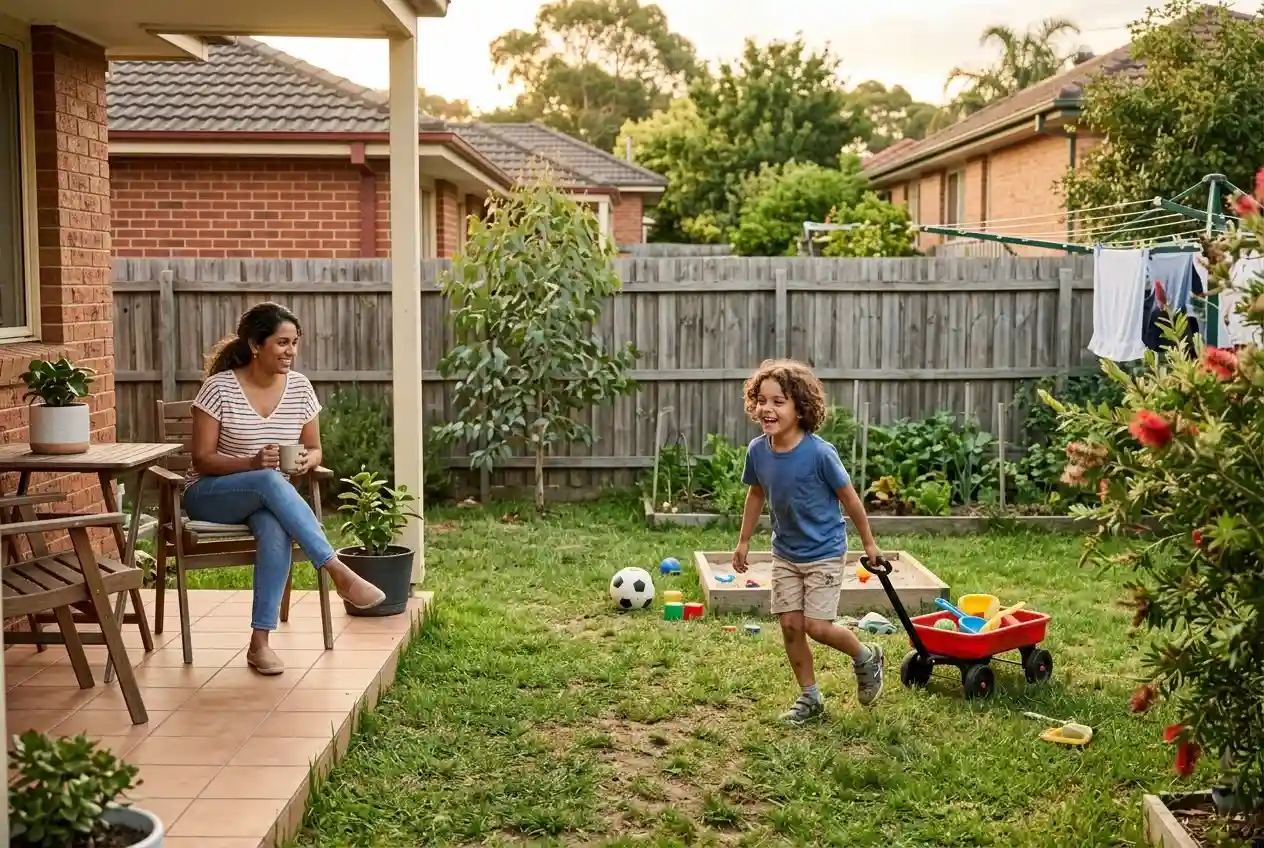
You don’t need to be everything. A few steady things carry a child a long way.
None of these are rules, just gentle options. You might lean into the ones that fit your week and let the rest go.
If you’d like it all laid out plainly, Raising Children Network has support made for single parents that’s warm and Australian.
Sometimes the other parent makes calm harder, and that isn’t on you.
You can only hold your own side of things. Where it’s safe to, keeping the tension away from the kids, and out of their small hands as messengers, protects them more than almost anything else you can do. Children feel caught in the middle even when nothing is said out loud.
That’s a hard thing to manage while you’re still hurting, so it’s completely fair to get support for it. If this is your daily reality, some practical ways of dealing with a difficult ex might take a little weight off your shoulders.
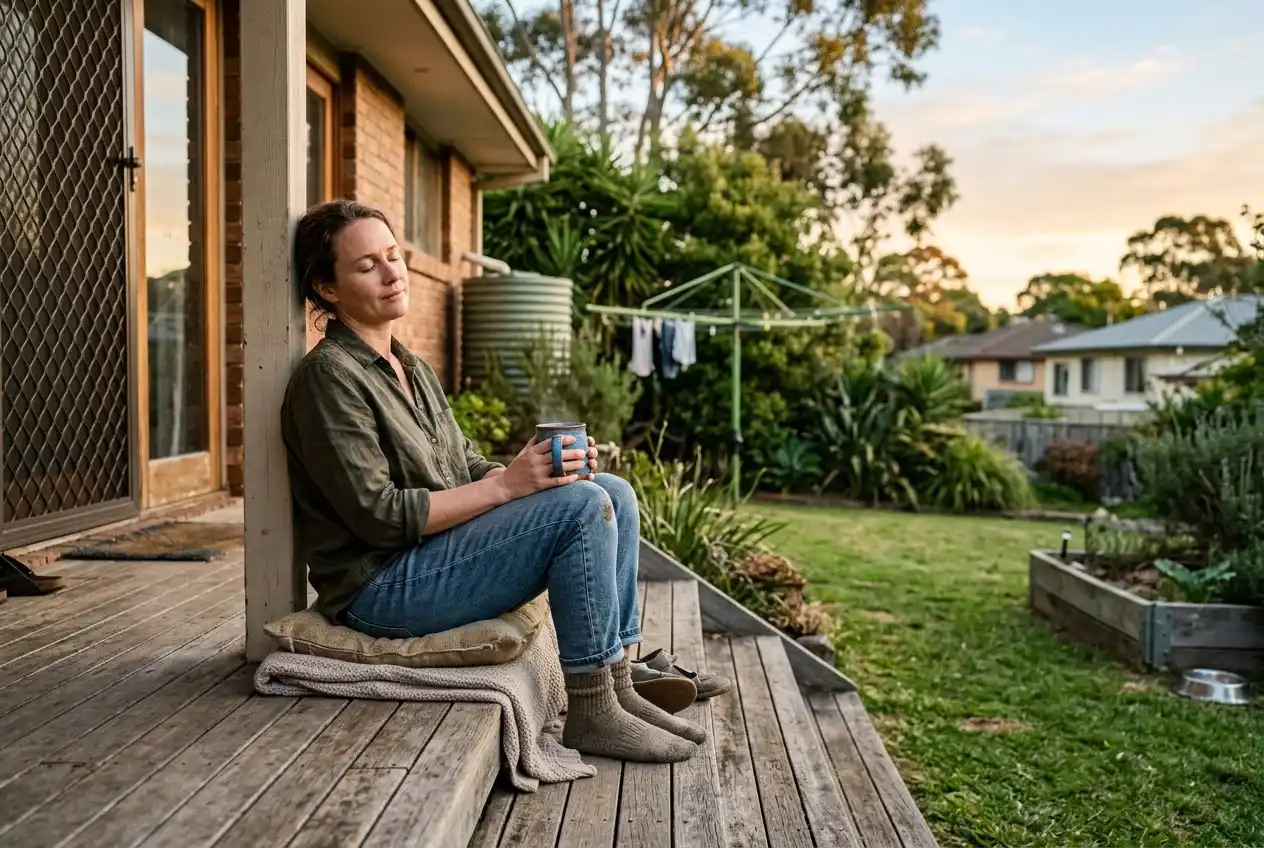
Let’s come back to where we started.
The kinder truth is that your children’s happiness was never riding on whether there were one or two of you at the table. It’s riding on love, on safety, and on a mum who’s looked after too. You already give the first two, every single day. The third is the one I’d gently nudge you towards, because you count in this picture as well.
If today feels like a lot, you don’t have to change everything at once. A gentle place to start is enough. And when you’re ready, you’re always welcome to talk it through with Elle.
You’re doing a big, quiet, important job, mama. And from everything the research shows, you’re very likely doing it far better than the worry in your head lets you believe.
Research doesn’t really frame it as better or worse. What matters most for children is warmth, safety, and low conflict, not the number of parents at home.
Not because of family structure on its own. How children fare tracks far more with conflict, money pressure, and how their parent is coping.
Yes. Children need love, safety, and steadiness, and none of those depend on having two parents in the house.
Usually not. Children often do better in a calm one-parent home than in a tense, high-conflict two-parent one.
Your wellbeing matters a great deal to them, which is exactly why looking after yourself helps them too. Support for you is support for your kids.
Warmth, a bit of routine, and connection carry a child a long way. You don’t have to be perfect, just steady and loving enough.
Your GP is a good first step, and Lifeline and Beyond Blue are there any time. Peer groups and counselling made for single mums can help too.
Book a Dedicated Counselling Session OR Explore Our Services


